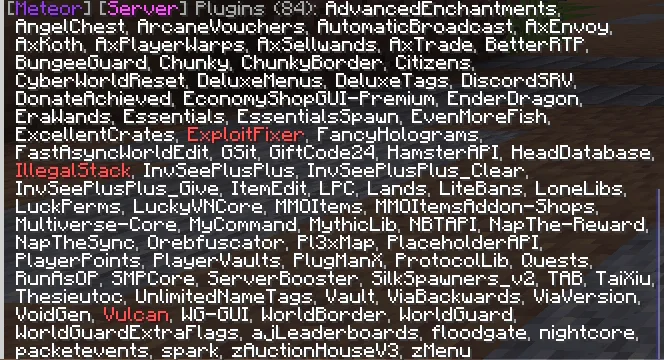
➥ Tập thói quen cài ít Plugins thôi, nếu thật sự muốn cân bằng hiệu năng thì đừng thêm cài gì nhiều vào. Sau gỡ lỗi có mà ná thở --
➥ Chạy 1 server phải đặt bản thân là ngừi chơi, thì mới biết cần gì, thêm gì sửa gì, và quan trọng, phải là người chơi thì mới biết phải móc tiền từ đâu, như nào. Tìm hiểu thêm tại Giáo trình nhập môn phát triển Game UIT và các tựa Game như:
➥ Chạy 1 server phải đặt bản thân là ngừi chơi, thì mới biết cần gì, thêm gì sửa gì, và quan trọng, phải là người chơi thì mới biết phải móc tiền từ đâu, như nào. Tìm hiểu thêm tại Giáo trình nhập môn phát triển Game UIT và các tựa Game như:
Dragon Nest
Elsword Ragnarok Online / Ragnarok M
MapleStory Gunny (PC / Mobile – DDTank)
Perfect World (Hoàn Mỹ Thế Giới – PC & Mobile)
Justice Online (Nghịch Thủy Hàn – 逆水寒)
Moonlight Blade Online (Thiên Nhai Minh Nguyệt Đao)
JX Online 3 (剑网3 – Kiếm Võng 3)
GuardianTales
--> Nhìn cách mà các con dân Marketing bên đó phát triển và duy trì cộng đồng người chơi như thế nào.

 www.youtube.com
➥ Nên tham khảo trước Giáo trình trường đại học, đặc biệt là những chuyên ngành như:
www.youtube.com
➥ Nên tham khảo trước Giáo trình trường đại học, đặc biệt là những chuyên ngành như:
Vì sao chúng ta lại ĐAM MÊ CHƠI GAME? (Góc nhìn của Phó tổng giám đốc VNG) | Spiderum | QUAN ĐIỂM
Vì sao chúng ta lại ĐAM MÊ CHƠI GAME? (Góc nhìn của Phó tổng giám đốc VNG) | SPIDERUMBài viết này không phải để thuyết phục bạn rằng chơi game rất tuyệt, và ...
www.youtube.com
- "Principles of Marketing" (Philip Kotler) – Cuốn "Kinh thánh" nhập môn Marketing.
- Introduction to Design Thinking for UX Beginners của Uijun Park.
- MI1010 - Giải tích I; MI1030 - Đại số; CEA201...
- System Performance - Enterprise and the Cloud của Brendan Gregg.
Không giúp máy chủ thành công hơn, nhưng sẽ giảm tỉ lệ thất bại của bạn xuống khi làm việc với con người.
➥ ˗ˋˏCơm áo gạo tiềnˎˊ˗ sẽ hủy diệt đam mê của bạn. Luôn thử sức nhé.
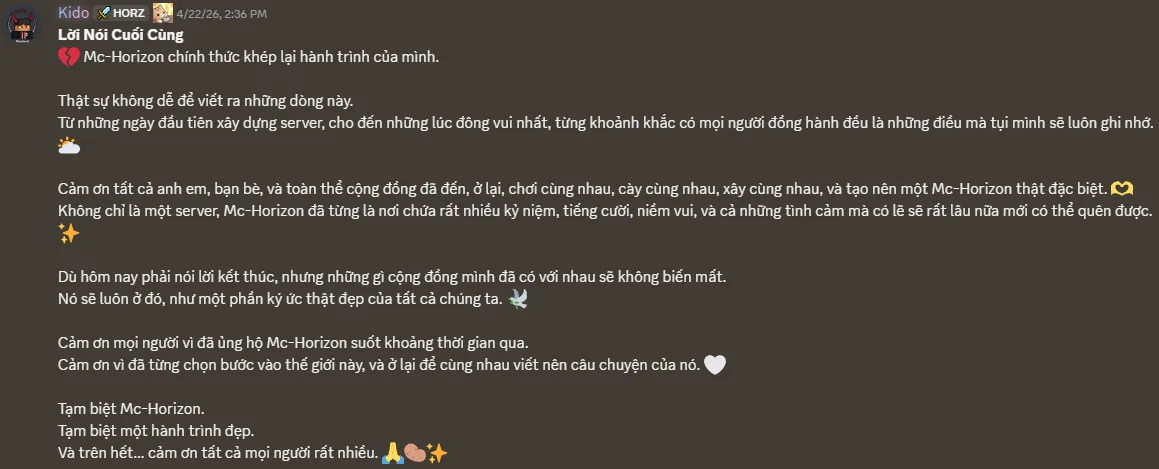
➥ Luôn luôn có một thằng Ấn Độ hoặc người Trung Quốc giỏi hơn bạn 
➥ Tham khảo MUG của Minecraft:
➥ Và EULA:

➥ Tham khảo MUG của Minecraft:
Wiki:
1. Why does your Minecraft server community and server exist?
Understanding "why" your community exists is an important first step to setting you up for long-term success. It sets the groundwork for how you find and advertise to new players, the types of events you run, the rules you have in place, and the game modes you develop. If you know "why" your server community exists, then it gives something more defined that your players will be able to understand and be excited to share with their friends. When someone asks them, "Why did you join that server?" they can know exactly what to say because they can consistently sense it through your entire server experience
2. Who is your target audience and how do you advertise to them?
Minecraft servers are great places for players to unite over something they all have in common - their shared identity. In smaller groups, it's easy to spot what ties everyone together. But as your community expands, it's super important to be clear about what gives your community an identity. Not every shared thing can be the glue holding you together (like, "We all wear iron helmets" versus "We're all UGerman college students playing KitPvP"). To really click as a community, the things you have in common need to be a big part of who you are and what you do. So, who is your community for and what makes them unique? How do you advertise to find new members to join your community?
3. In the next 12 months, what three metrics will define success for your server?
Picture the ultimate Minecraft experience on your server - what's it like being part of your crew? What cool stuff are you bringing to the table for your players? Once you've got that down, you can measure how well you're doing in the short and long term. Start by thinking about some basic metrics, like how many players have played on your server in a month or how many epic events you've run. As you explore this idea of measuring your success, level up your skills and set even bigger or more specific goals.
4. What are three principles that are most valuable to your community?
A community is a unique opportunity for a group of players to treat each other in a special way, maybe in a better way than they would without the existence of the community structure. But in order for that to happen, the community has to first agree on what it believes in. The principles that a server follows is a compass pointing them to success, and they can also be closely related to the first question in this workbook, "Why does your community exist?" A shared set of values is incredibly powerful. It represents an aspirational way of life for the community and provides a north star for all actions and interactions in the community. Ultimately, knowing that they believe in similar values will help players create deeper and longer lasting bonds. It's also incredibly helpful for staff team members to understand the culture and principles of the server they're working at so that they can represent those values well as they work on the server. What values and principles are the most important to you? These could be based on competitions, gameplay, inclusivity, player safety, community engagement, a chill atmosphere, or many other things.
5. How does each player’s experience start when they join your server? How does this express your values in action?
When managing a community, you want each new player's first experience to reflect what your server's values and audience. It always comes back to, "Why does your server exist?", even on the first action a player takes. For example, if you value having a very relaxed and survival experience, and you advertise your server to a more mature and chill audience, you don't want their first experience on the server to be an immediate PvP battle with OP players or a Wither boss fight. Defining the player's first experience can help you hit the ground running with them and turn player bounces into long-term loyalty.
6. What are the different roles that members can play in your community? What does each role do?
The roles in your community can be short and sweet or widespread and complex, but as long as it is clear what those roles are, players can have a confident understanding on who to contact, when, and what they can do. Roles can include your server staff roles, volunteers, and admins or above, as well as player-based roles such as new players, those with PvP toggled on, educators, parents, or play-style-based. If you can define each role on your server in 1-2 sentences, then so can your players, and it gives them something they might aim to achieve in the future as they play long-term on your server.
7. What are the most important rules that you have to help you achieve your server's purpose and values?
While you may have already added your server's rules to our Rules Editor or linked to a page on your website on your edit-server page, it can be a good idea to think about what your most important rules are in your community. This can help make sure that any server moderators you have know where to focus their primary attention, and which rules players will be highly expected to follow in order to uphold the values of your server. You don't need to copy all of your rules here (unless they're all equally valuable to you, of course), but think of the ones that are most important to creating a great experience that aligns with your community's interests and gameplay and list those here.
8. How do you make decisions for the server? Who gets to decide what?
Did you know that different decision-making styles and processes can impact how players interact on the server? Some servers have open decisions with the community of players directly involved, while other servers allow a single person or small group make the decisions which the rest of the players follow. Each of these can have positive and negative impacts on the player experience, but the most important thing is that this process is consistent and understood by everyone involved. If your staff and players know how decisions are made, when, and who makes them, then that can help alleviate tension or confusion that might be caused, while simultaneously making them excited to follow along with the process as the server evolves over time. How do you make decisions for your server? Is it a group effort, do different team members make different kinds of decisions, or is one person responsible for all decisions made?
9. What are the risks that can prevent your community from thriving? What tools do you use to protect your server and players? Are they reactive or proactive?
Managing a Minecraft community comes with many potential challenges, and you will get to know these well over time. You don't need to have a plan for every possible risk, but it's a good idea to exercise this thought-process and ask yourself what possible challenges might lie ahead for you. If you can write those down now, it can help you resolve the issues or prepare solutions ahead of time and reduce any possible damage the challenges may cause. Risks to your server might be relating to user-generated content (UGC), chat moderation, player retention, server stability and performance, player disputes or griefing, or financial challenges. What challenges are the most concerning for you that you want to make sure you're prepared for? What challenges and risks do you already have solutions in place to prevent or mitigate?
10. What are the simplest channels for you to communicate with other staff? With players? How often do you talk with them?
"Community" and "Communication" have a lot more in common than just the first 7 letters! When, where, and how often you communicate with your players can dramatically influence the satisfaction and long-term loyalty they have with your server. You can use many tools to communicate different messages and engage with your community. Do you use Discord? In-game announcements? A blog? Forums? Social media? Do your players know how to get help if they have a problem or question? What about talking with your staff - do they know where to go to get the best answers so they can do their jobs more excellently? If you define that here, then it can help you prioritize where you communicate with your staff and players later.